By Cardiff Dice Studz historical advisor, Mike Lane
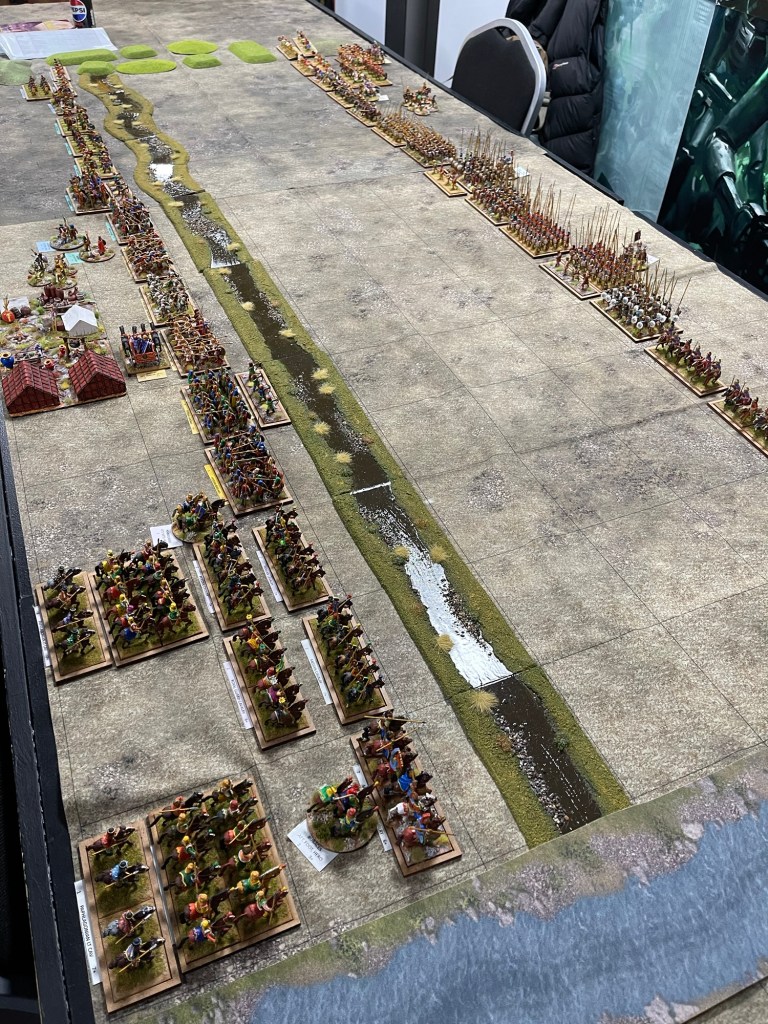
My weekly pilgrimage to the wonderful Firestorm Games began early yesterday at one o’clock for five of us to play my version of the Battle of Issus fought in 333 BC between Alexander the Great and Darius III, the Great King of Persia. Darius had outmanoeuvred Alexander by cutting in behind his advance and blocking his line of communication back into Asia Minor. Indeed it was a very Napoleonic ( have just been listening to Andrew Roberts’ excellent biography of “Napoleon the Great” on Audible) strategy!

Alexander retraced his steps and found the Persians blocking his way formed up behind the Pinarus River between the Sea and the coastal hills. It did give Alexander one advantage, he was unlikely to be easily outflanked.
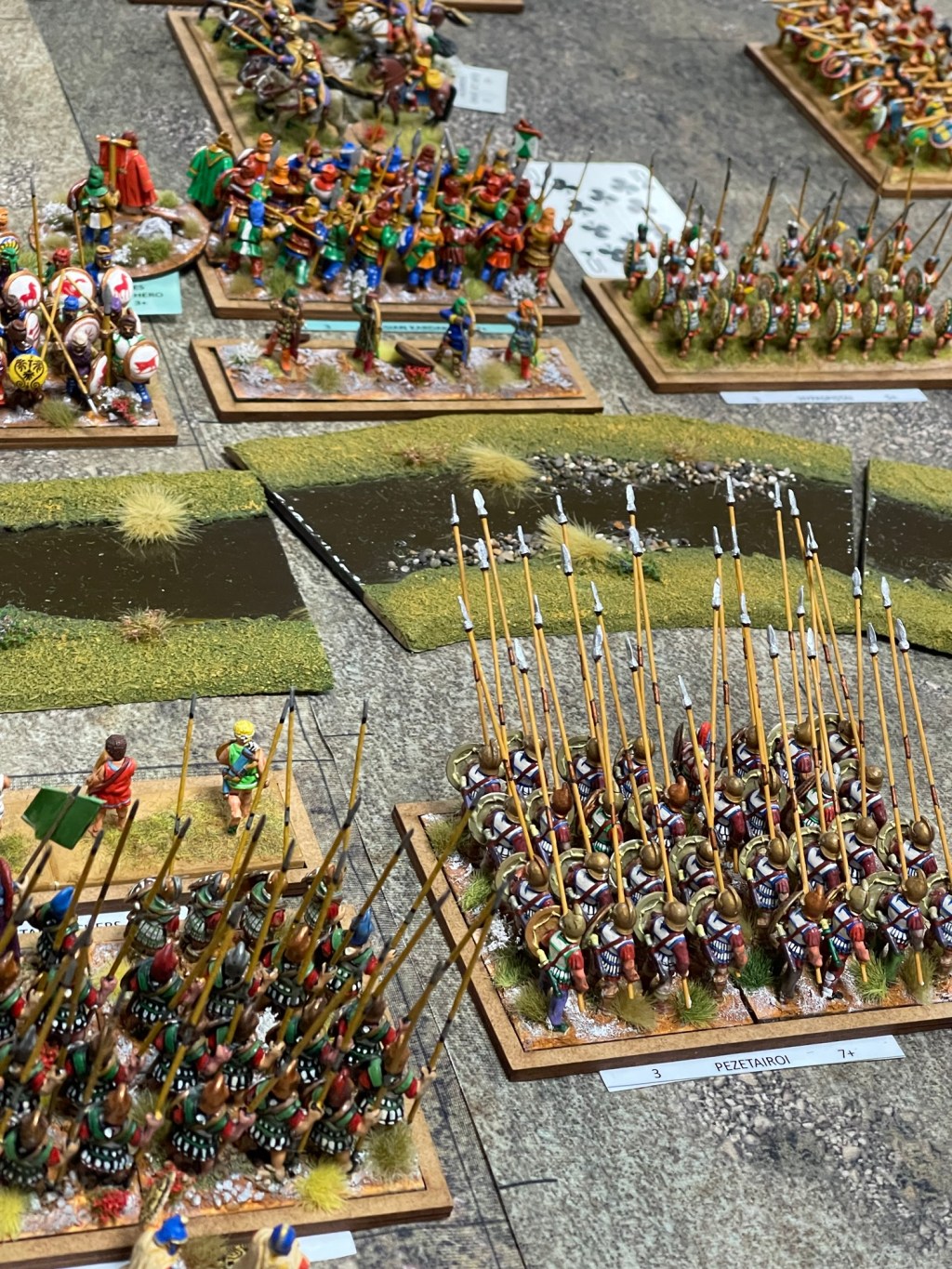
We fought the battle with my figures using the superb “To the Strongest!” Rules written by Simon Miller with 230 points a side and each army having five generals. I gave the Persians a camp but not the Macedonians as Alexander formed his army for battle directly from his line of march from the south. The Persian camp and all its contents was of course captured by Alexander’s army after the battle so had to be included. Alexander was a Great Leader under the rules though, as it transpired, he had little need of such aids as James Churchill supplied all necessary elan!

As eluded to in the last paragraph James Churchill was Alexander while David Lowrie, a late arrival, was Nikanor commanding the Hypaspists and half the Phalanx with Douglas Baldwin taking on the role of Parmenion, Alexander’s great second-in-command.
On the Persian side I took the role of the Great King in my four horse chariot commanding the infantry centre and the lighter troops on the left. Sid Bennett was Nabarzanes, the Chiliarch, commanding the massed Persian horse alongside the Sea.

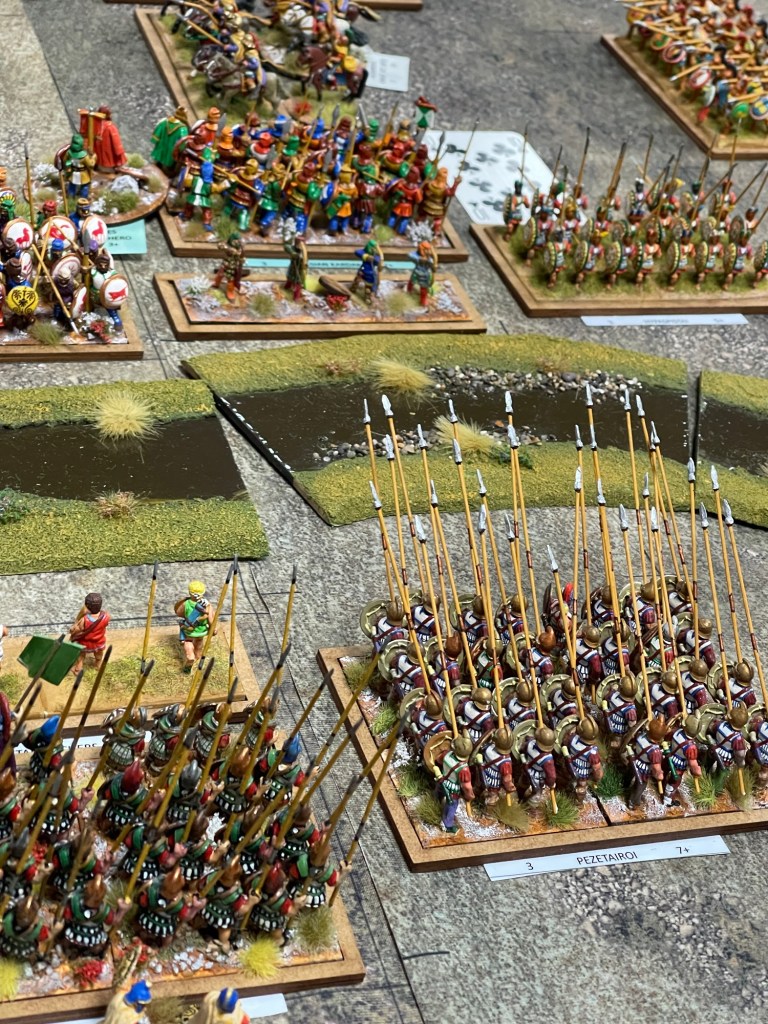
As Darius, I stood on the defensive behind the river while Sid was able to cross the lower Pinarus, where the river was treated as easy going and take on Parmenion’s wing. Alexander began with an immediate attack on his right while the phalanx entirely stood defensively as a mere threat refusing to attempt to cross the Pinarus and attack the Persian centre. They had learnt from history where they had been given a bloody nose by the Hoplites. Parmenion fought a defensive holding action giving Alexander, he hoped, time to win the battle on the right wing.
Ariston commanding the Agrianians and other light infantry backed by Mercenary Hoplites and aided by rhomphaia-less Thracian Peltasts soon routed the Persian left flank and turned deftly to aid Alexander himself to begin to roll up the left of the Persian infantry,

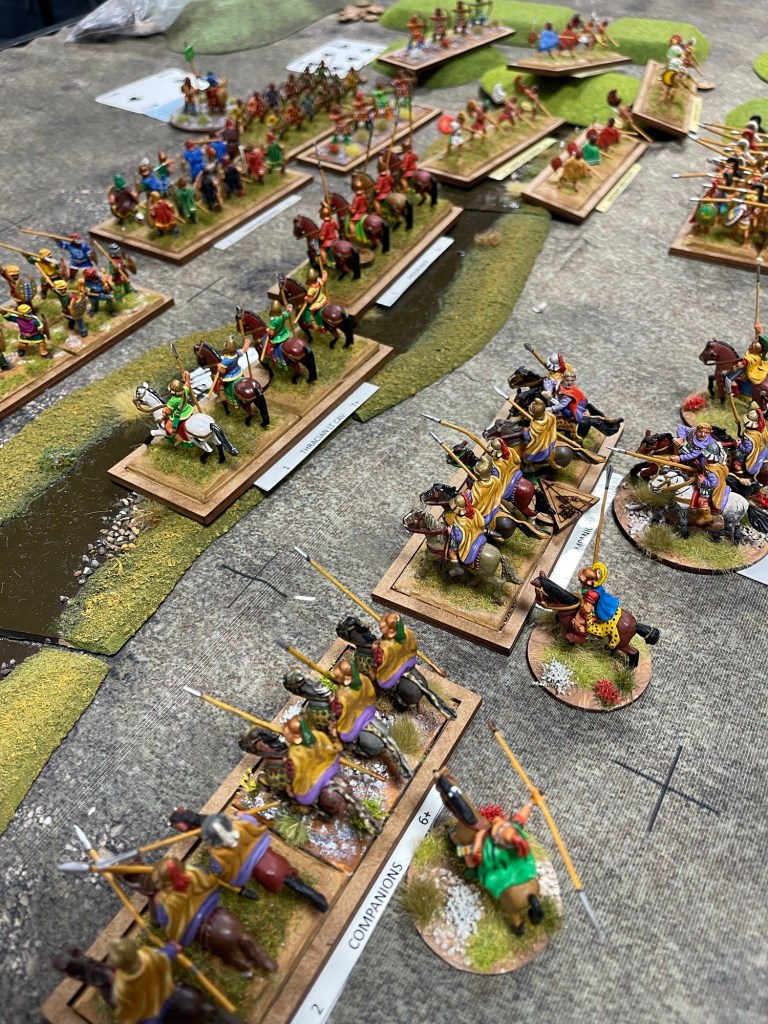
Alexander led a successful cavalry charge that broke through with the Prodromoi racing ahead of him to loot the Persian camp. Darius saw what was happening and turned his Royal Foot Guard, the Applebearers, to prevent the capture of his wife, Stateira, and mother, Sisigambis, in the camp.

At the same time, Asames, commanding the left of the Persian infantry centre, turned a unit of Kardaka about and pinned Alexander, checking his headlong rush towards the Great King. We did not, unfortunately, manage to recreate the scene shown in the great mosaic from Pompeii of Alexander confronting Darius at the Battle of Issus.
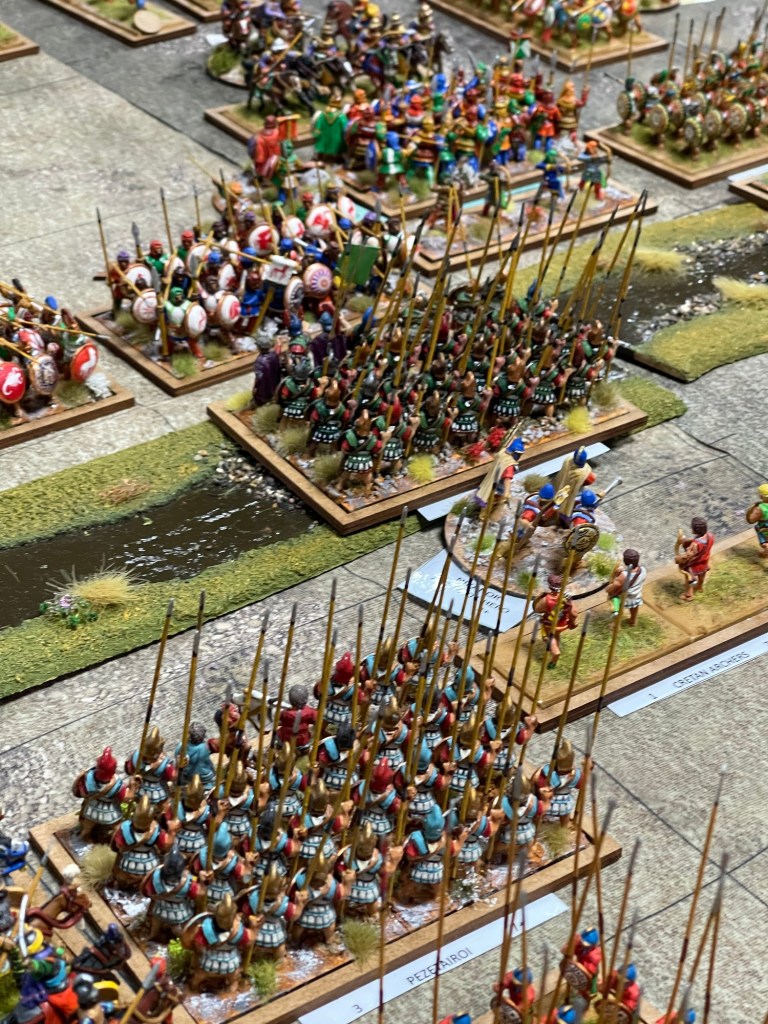
Meanwhile Nabarzanes (Sid in disguise) was tearing Parmenion’s wing to shreds gathering up Victory Medals with a vengeance. I did gain a few by shooting some skirmishing light horse and light infantry but was otherwise haemorrhaging Victory Medals myself.

As the battle reached its climax, Macedon had five medals left and the Persians an almost equal number, six. Then James launched a charge with the second Companion Cavalry unit into the Persian archers guarding the river and the rear of Arsames’ men confronting Alexander. The light troops failed to evade and died. One Medal lost.
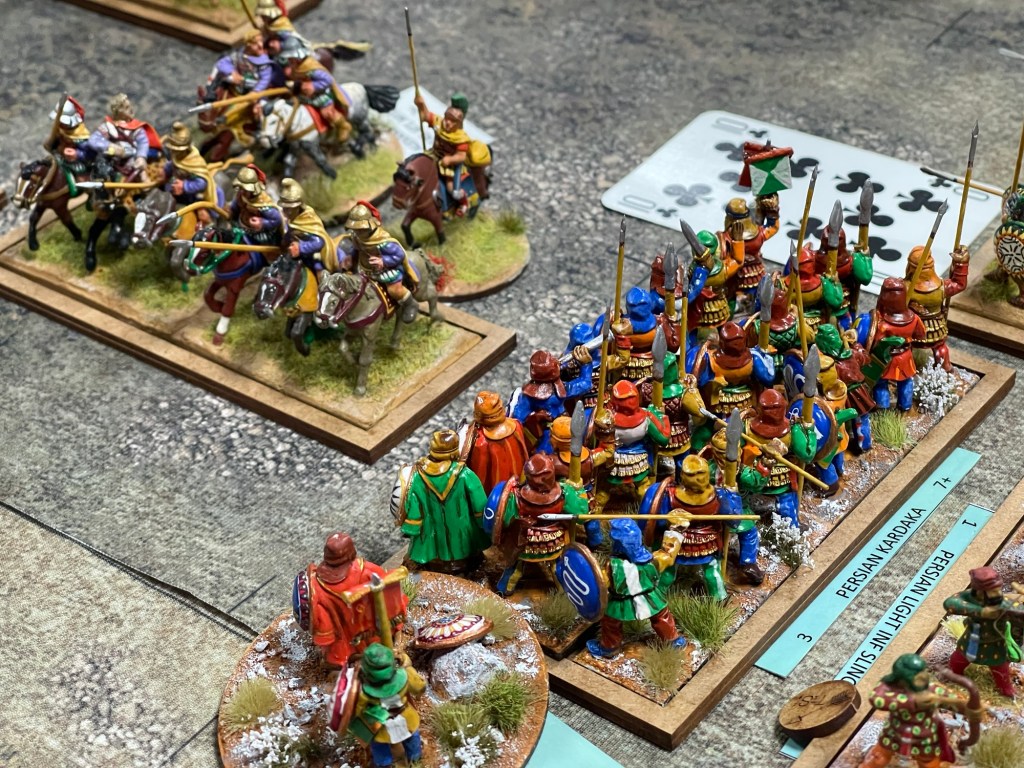
Then the Companions hit the rear of Arsames’ Kardaka, hitting with all three blows. I saved one hit on the Kardaka leaving them twice disordered and Arsames himself was slain, gallantly I am sure. Another two Medals lost and three left. Alexander then led a frontal charge by his own Companions into the front of Arsames’ now twice disordered Kardaka. A hit! Could I save? I heard a certain Mr Baldwin make an insinuating remark about my cardigan and cards up sleeves, but to disprove the schoolteacher’s evil minded theory wrong, I drew the card and the Kardaka were lost, three more Victory Medals lost and it was all over!
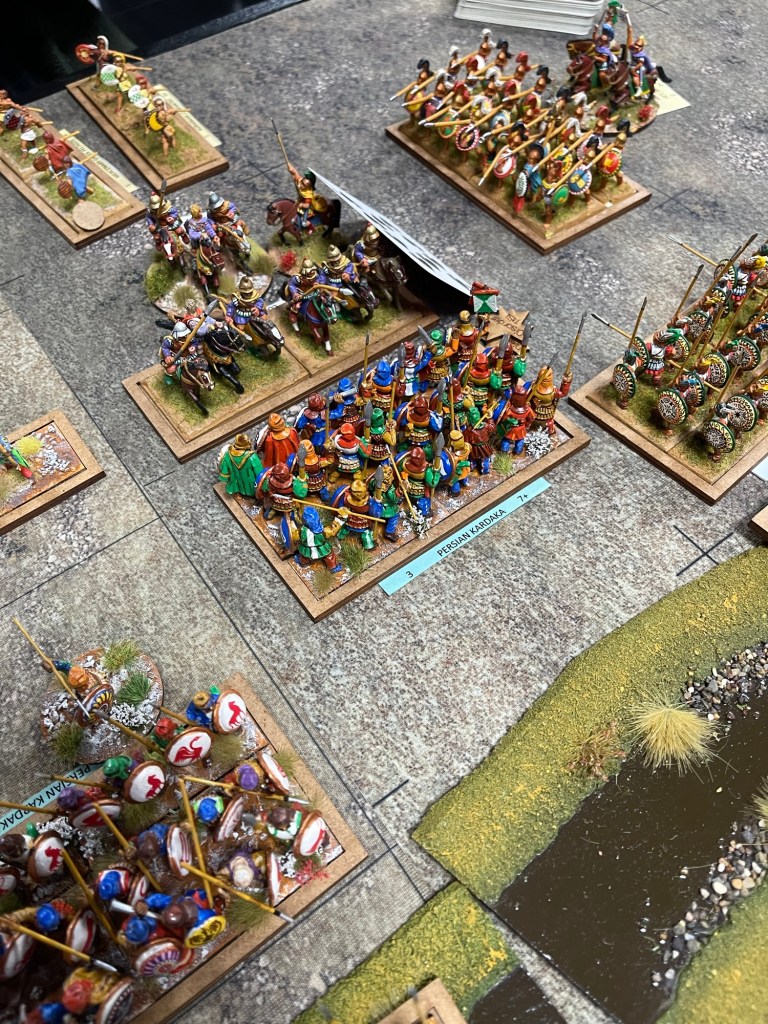
Another game then proving how well “To the Strongest!” works in refights of historical battles. We started the game at approximately 2:15 pm and we had fought the game to a conclusion, packed it all up and I set out for home a very happy chap at 4:55 pm. Not only a great set of rules but quick to play too.
This was a first rehearsal of this battle which I hope to present at the Society of Ancients Convention in October at their excellent venue at Madingly Hall, Cambridge. I will certainly give each side an extra general and think it might be as well to bolster both the Persian and the Macedonian left wings at least a little! I do hope to set up at least another rehearsal of the battle before venturing on the long trek up to Cambridge.



 Despertaferres
Leave a comment