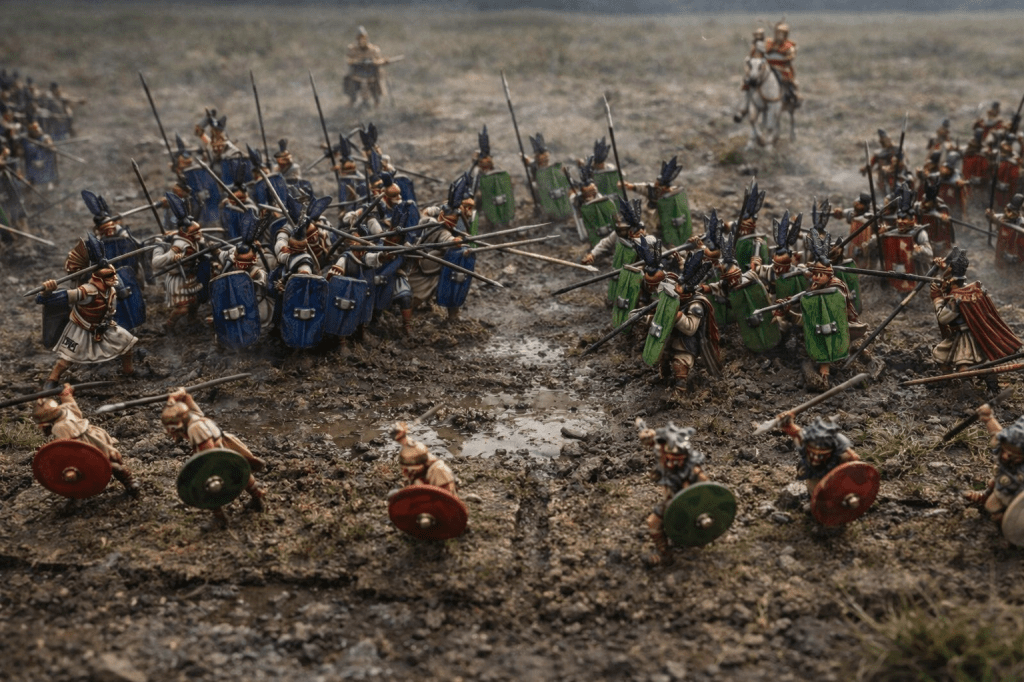
Cardiff Studz Climatic Battle for 2025
By Sid Bennett
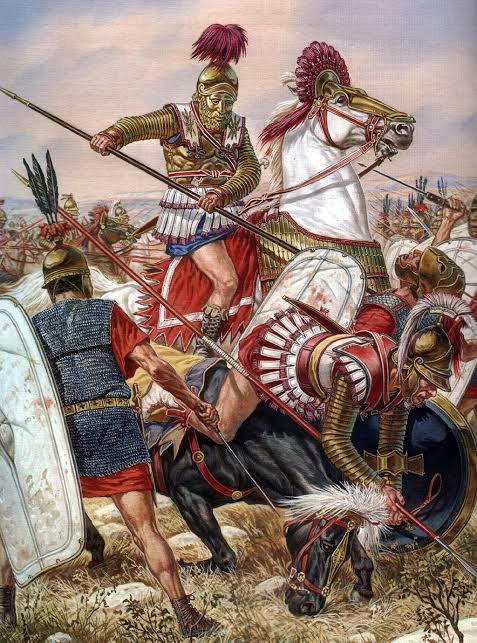
In November there was talk amongst the Studz inner circle (Imagine the traitors television programme with hoods and lanterns – it was nothing like that) about a Christmas game.
Many ideas were mooted and rules systems discussed. We have had quite an eclectic year and tried out several new systems including Rommel, Nimitix, Silver Bayonet, boardgames Command and Colors and lately Sword and Spear. It was decided that TTS would be the fall back option as it handles large games and large gamers – sorry large numbers of gamers – very well.
We had hoped to play before Christmas but commitments and health issues messed things up, so we decided to go for Tuesday 30 December.
Then, unsurprisingly, being the control freak that I am, I put myself forward to organise it. There were 6 players who put themselves forward, but I tried to create a game playable by 4-8 in case we had dropouts or unexpected visitors. When herding wargaming cats its best to be flexible.
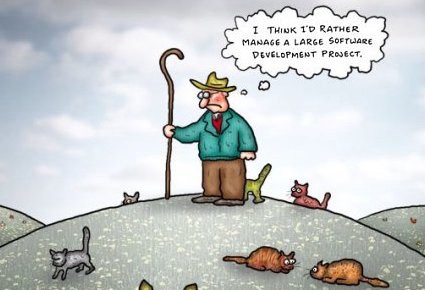
One battle which I have always wanted to play was Magnesia in 190 BCE. The great confrontation between the Seleucid Empire and Republican Rome at its absolute zenith after winning the Second Punic war in 202 BCE.
The Seleucids led by Antiochus the Great fresh from his triumphs over the Parthians and Ptolemaics. Rome led by the legendary Scipio Africanus who crushed Hannibal at Zama. On the day, Scipio Africanus was ill and his baby brother Lucius Cornelius Scipio took command.
The battle has everything an ancient wargamer could want. The roman legions of Velites/Hastati/Principes/Triarii. Camels, Scythed chariots, cataphracts and pikes. All the toys you could wish for.
The battle is relatively well documented by Livy and Appian. I was also fortunate to have an old but battered copy of Bar Kochva on the Seleucid army.
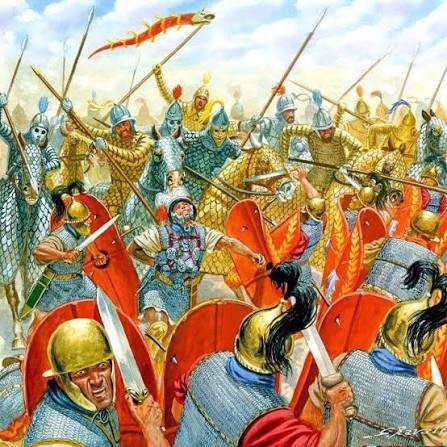
The historical account was that in rain and mist the armies came together. The Seleucid cataphracts charged the Roman left smashing through the legions who had never met them before, driving this wing back to the camp. Meanwhile on the Roman right the Pergamene allies under Eumenes used their light infantry to drive back the Seleucid scythed chariots who turned back into their own cavalry disrupting them and allowing the Roman and Pergamene cavalry to sweep away the disorganised Seleucids.
Meanwhile the victorious Seleucid right was held at the fortified Roman camp and took no further part in the battle. This left the Seleucid centre isolated. The Seleucid pikes formed square to avoid being outflanked. For some reason the Seleucid pike had formed 32 deep and were able to stand firm. However, Antiochus had placed elephants in the gaps between the pike formations. Possibly in imitation of the close support his elephants had given his pike 10 years earlier at the battle of Panium where they helped his infantry beat the Ptolemies.
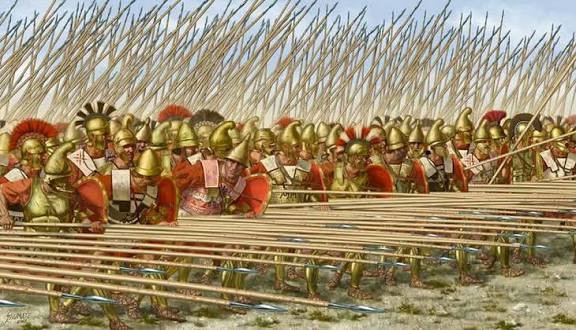
The legions and velites threw missile weapons at the elephants who rampaged, thus disrupting the pike who were then easy meat for the legions.
So, an interesting battle, but how to make it work in a day of gaming. More importantly, did I have the figures to make it work?
As it happens, I purchased the new Thureophoroi figures from Victrix at Warfare so that would do for the Pergamene infantry. This also inspired me to get painting, they soon came off the production line, not amazing but workmanlike enough to get on the table.
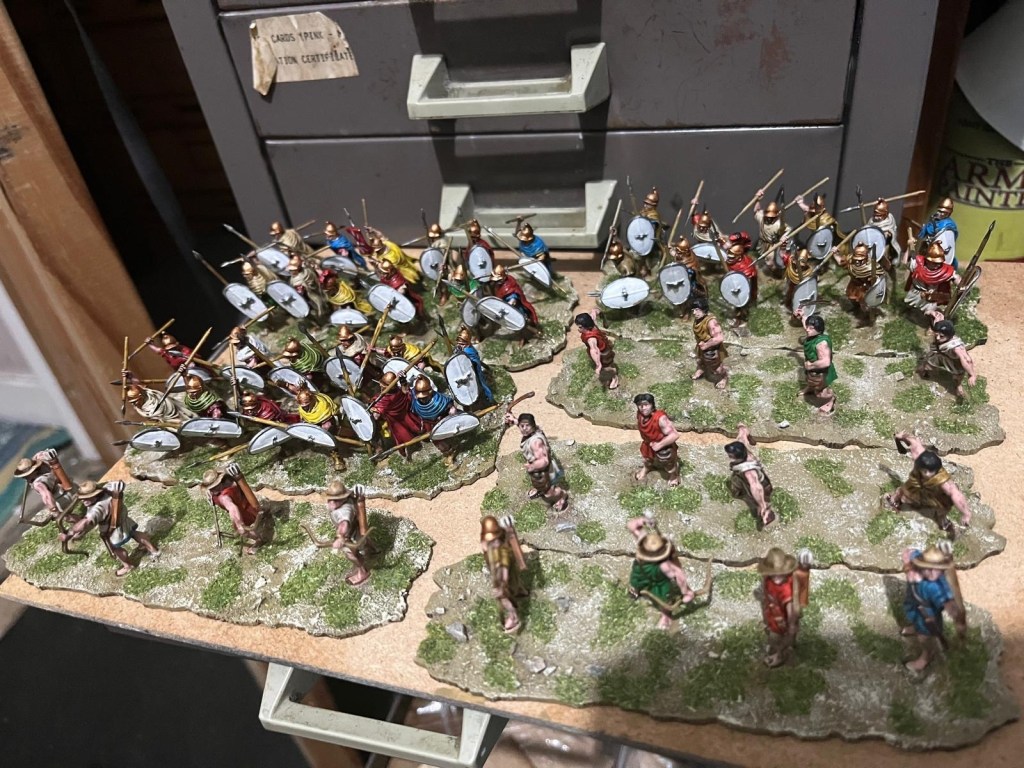
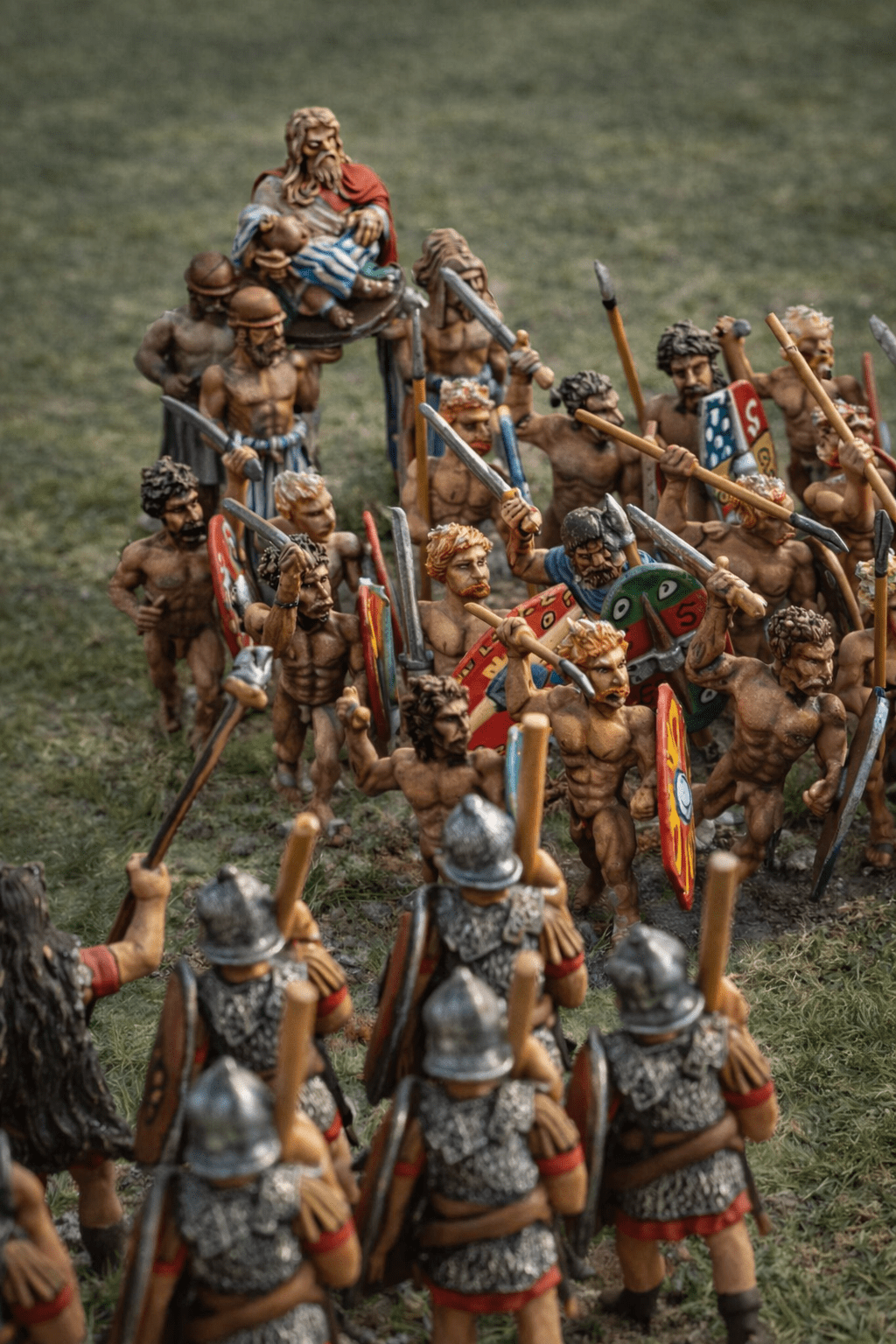
The Romans were easy as six months earlier, I had been clearing out my attic and discovered a fully painted Renegade miniatures 28mm Republican Roman army, I had forgotten I had. Only 6 quincunxes were in the attic, but I could borrow a couple more from the inestimable Mr Michael Lane who generously offered to rebase them in the style I had done so.
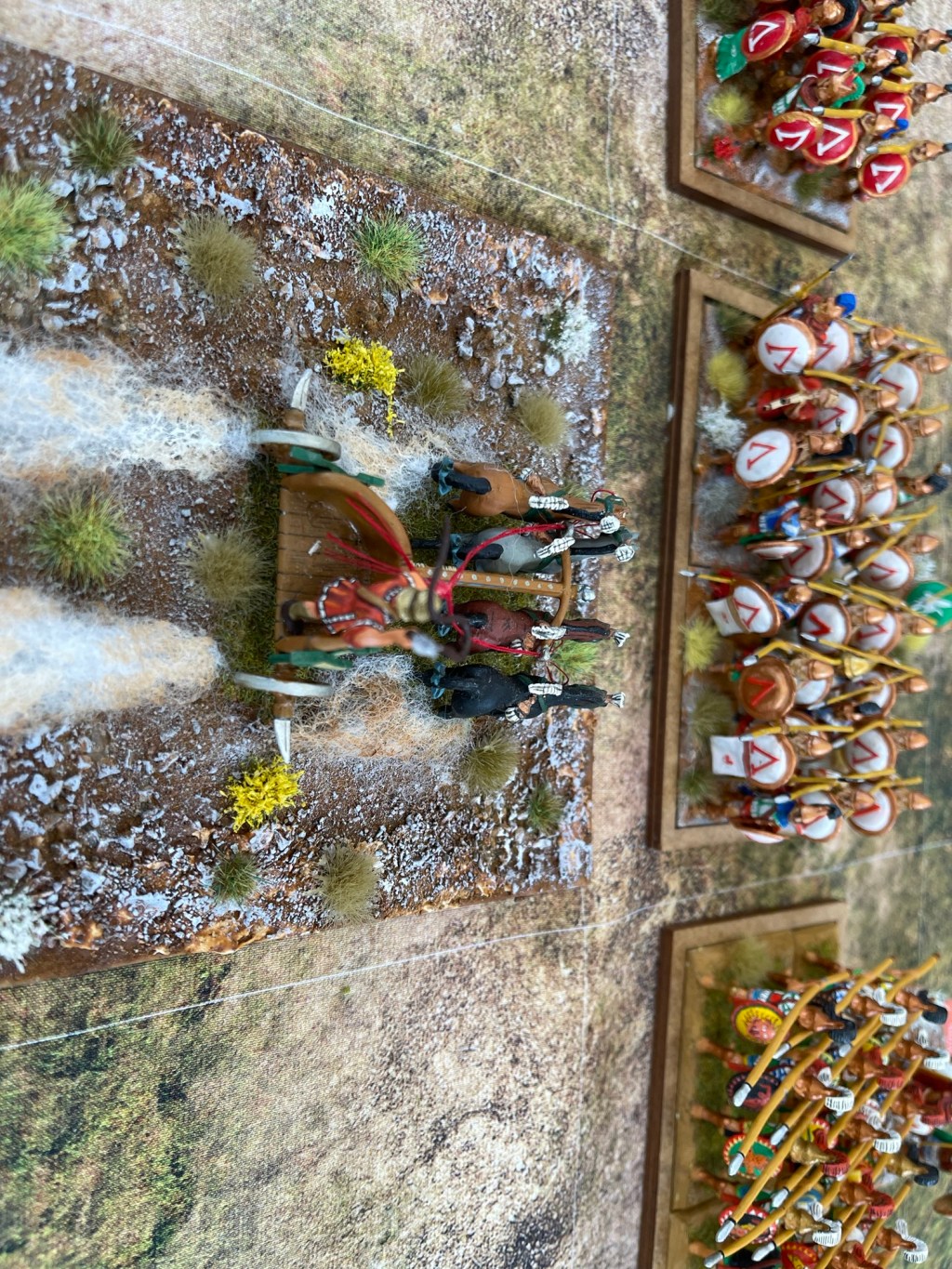
He was also kind enough to provide some extra bowmen, the scythed chariots, a couple of elephants and some camels. My Pyrrhic army with help from my Greeks and Parthians would provide the rest of the Seleucid host.
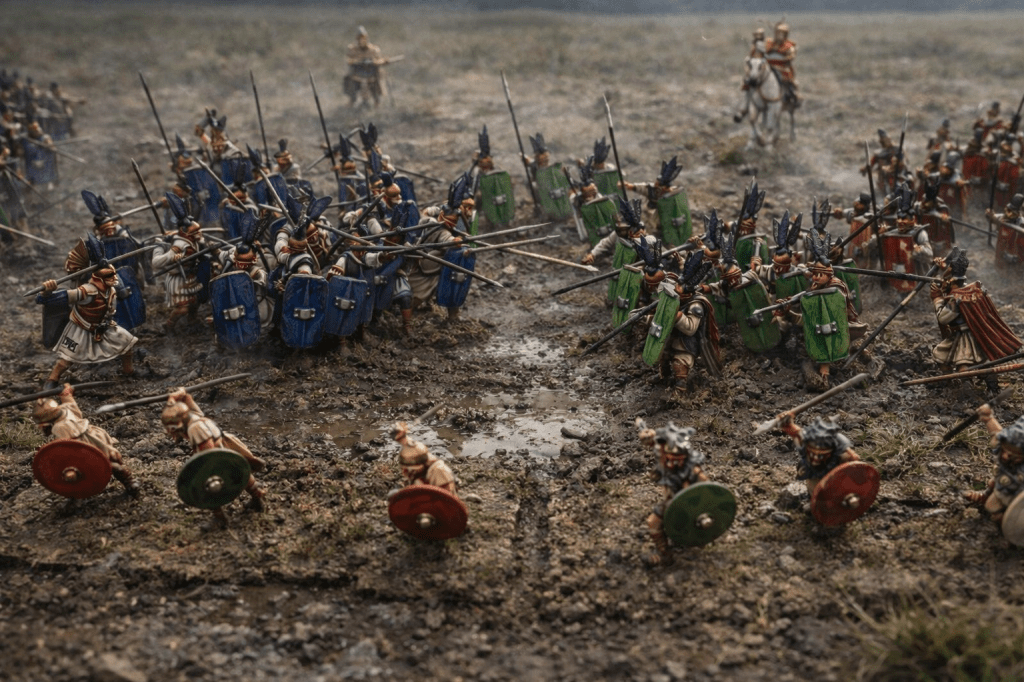
The battle had 30-50k Romans against 50-72k Seleucids. So,the first thing to do was how to fudge the numbers. The book by Bar Kochva was very helpful in this respect, as he argued both armies had a similar frontage and gave details how this could work. The fact the Seleucid pike was 32 deep helped, plus the fact that many of the Seleucid troops were poor quality light infantry. The Romans I decided would be an all-veteran elite force, which would be right for an army with many veterans of the Punic war led by one of the greatest Roman generals – ever! He might not have fought on the day but certainly organised and trained his army.
The first consideration was how to reflect the deep phalanx with elephants in the gaps. If I had units of elephants between pikes, then the frontage would be too much or even worse, I would have to deploy less units. In the end, Simon Miller came to my rescue and he sent me details of a previous refight by Ian Notter. In that document the elephants were not ontable but considered as an attachment to the pike. In reality there were only two elephants between each pike formations. The ruling was an extra attack by each pike block hitting on an 8, however a failed save of an ace means the elephant would be lost and automatically rampage against the pike block as well as the normal rampage behind the pike block. As the pike were 32 deep, I allocated them 4 hits. So, a lost elephant would be a hit then the rampage would risk a second hit. So much like in history the pikes were formidable, but the elephants could make things go sideways very quickly.
The weather would mean that the command distance for commanders would be reduced to 1 square from 2. Plus, any shooting from the Seleucid side of the table towards the Roman side would give any unit hit a plus one save.
According to Livy “The morning haze, which as the day advanced lifted into clouds, obscured the atmosphere, and then a drizzling rain coming with the south wind wetted everything. This did not inconvenience the Romans much, but it was a serious disadvantage to the king’s troops”
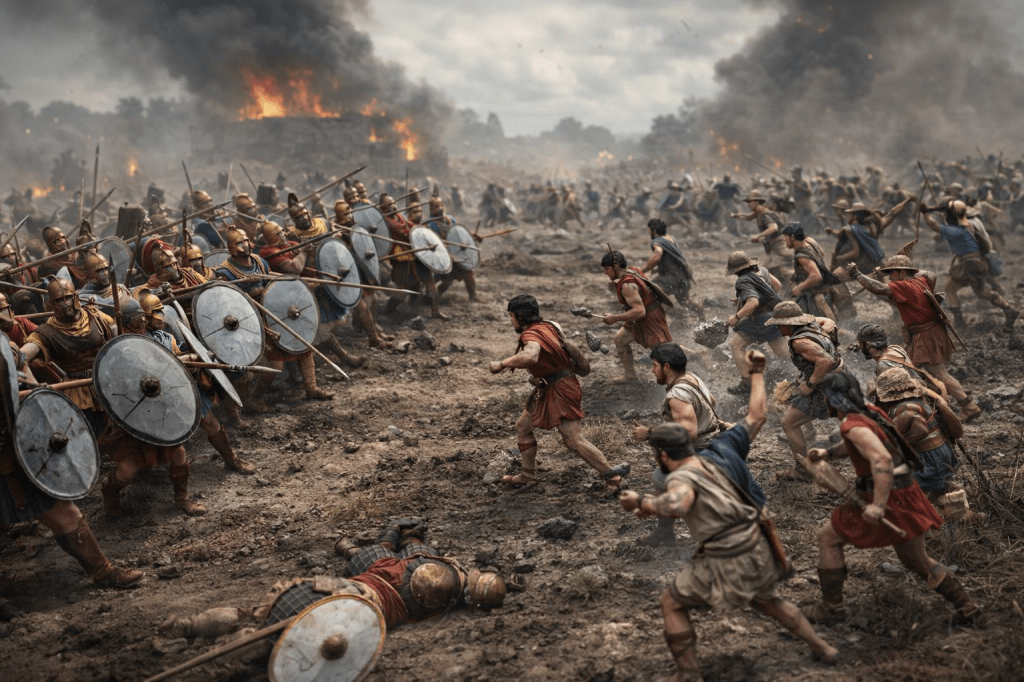
The charge of Antiochus’ cataphracts was particularly effective as the Romans had not previously encountered them and they had only been used by the Seleucids 10 years before at Panium. To reflect this, we would disregard the +1 save for formed foot against mounted if it was legions against cataphracts.
As I love a good tinker, I would also disregard any loss of a coin by the Romans on an evens card to rally if it was part of a line exchange activation. I consider myself well read on this period and cannot recall a single instance when the line exchange failed or got into difficulties.
The terrain was very open so it would be for our refight. There would be a river on the Roman left, the Seleucid centre would be deployed on a hill line on the base edge. There would be no other terrain.
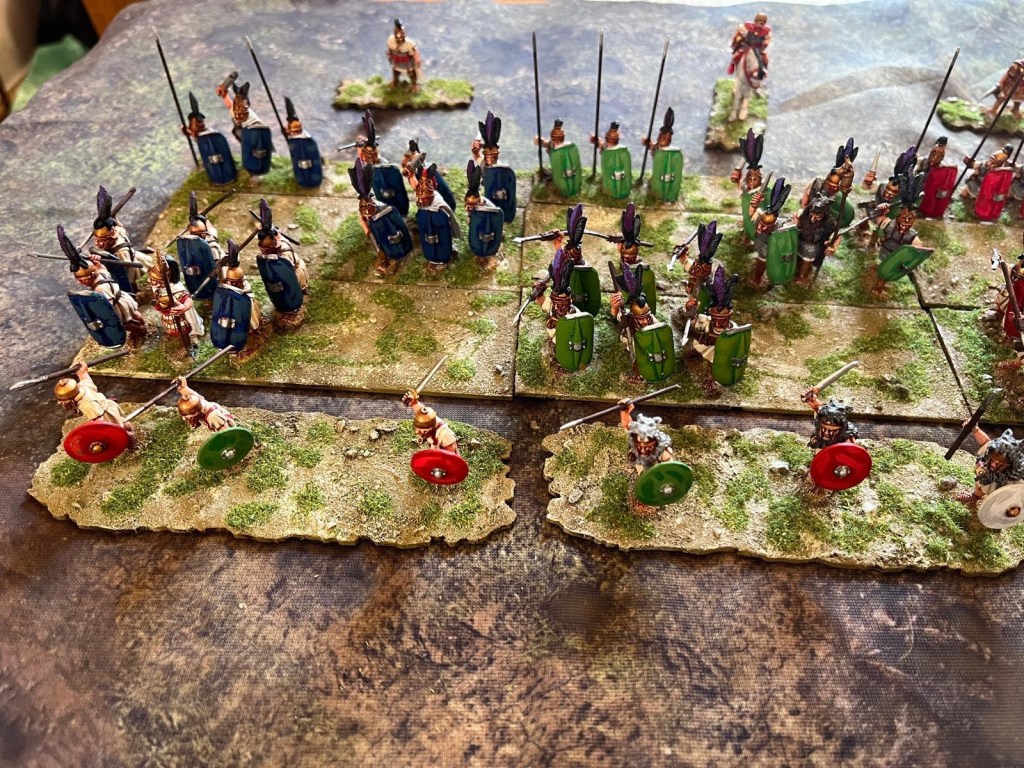
The Roman fortified triple camp would be on table with a single unit of raw javelinmen as the Macedonian/Thracian troop garrison as described in the accounts. This unit would not be part of any command so would be that little bit more difficult to control. The Seleucid camp would not be on table. Even when the Roman right defeated its opposite numbers,they did not attack a camp.
The lists for both armies came to around 310 points with 30 units a piece. The Seleucids had a larger and more formidable cavalry force but split evenly on both flanks, whereas the Romans concentrated theirs on their right side. The deployments would be historical and outside the control of the players, this will be a refight.
So the thinking is complete, the armies are mustered, let’s see the players mess everything up. The next article will be the refight itself.
Here’s to a Happy New Year!



 Despertaferres
Leave a comment