
As we wait for the official Renaissance supplement from our favourite rules author, the Tercio continue with our stop gap set https://despertaferres.wordpress.com/lart-de-la-guerre-variant-les-grandes-revoltes/
The play testing so far has been set in the English civil war and is due for version 1.1 ASAP. Colin Evans is currently bringing his computer like mind to the task of compiling a larger, more ambitious set which will be published here too. Our game this week was the biggest so far and necessitated leaving our usual source of DBA lists. Martin and Chris were today’s play testers but are both slow readers so could not read the three page ruleset in the two weeks before this battle. Martin chose the Imperialist army from the Second Polish Swedish war , just before its conclusion in 1632. An exciting area of combat with some new and exotic troop types.
 The Catholic Germans included;
Three ordinary generals, fifteen Pistols ( ordinary), four pike units, eight musket units, a regimental gun and an artillery piece.
This was the first time we experimented with “units”. The pike and musket regiments had to stay within three UDs of each other. The other option is covered by the Baroque ruleset and early leaks of the ADLG Renaissance set, I.e. A single large multi unit base. See what you think? Should muskets stay within three UDs of the parent pikes?
Chris “lead” the Polish Lithuanian Rzeczpospolita
Three ordinary general’s, five Hussars ( Lancers fast), four Polish Armoured Cossacks ( heavy cavalry), three Polish unarmoured Cossacks ( lighthorse with carbines), six Haiduks ( shock shot), three Registered Cossacks ( shock shot), two elite Livonian Curassiers and two artillery units.
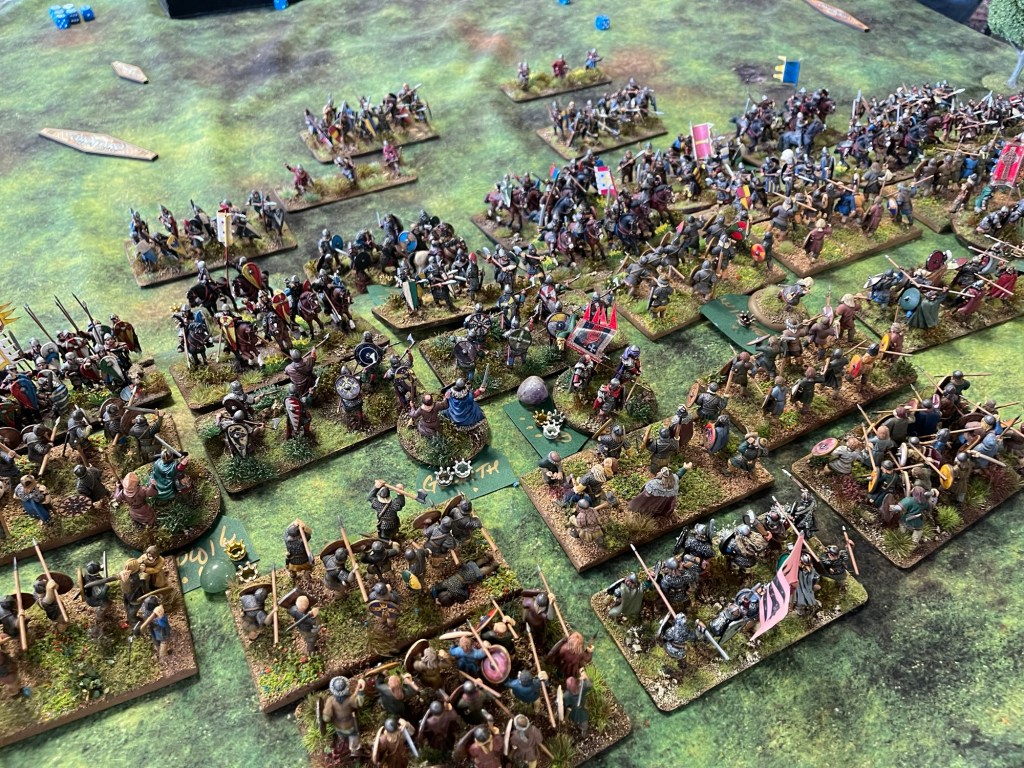
 Martin and Chris followed the usual ADLG set up rules. Chris shielded his Cossack corps behind a low ridge on his right. He set up his cannon in the centre to the right of a long line of Haiduks and their ferocious looking axe rests.


Martin’s Imperialists positioned just a single battery of cannons to hold his left. His pike and shot units filled most of his frontage, with massed heavy cavalry in the woodlands.

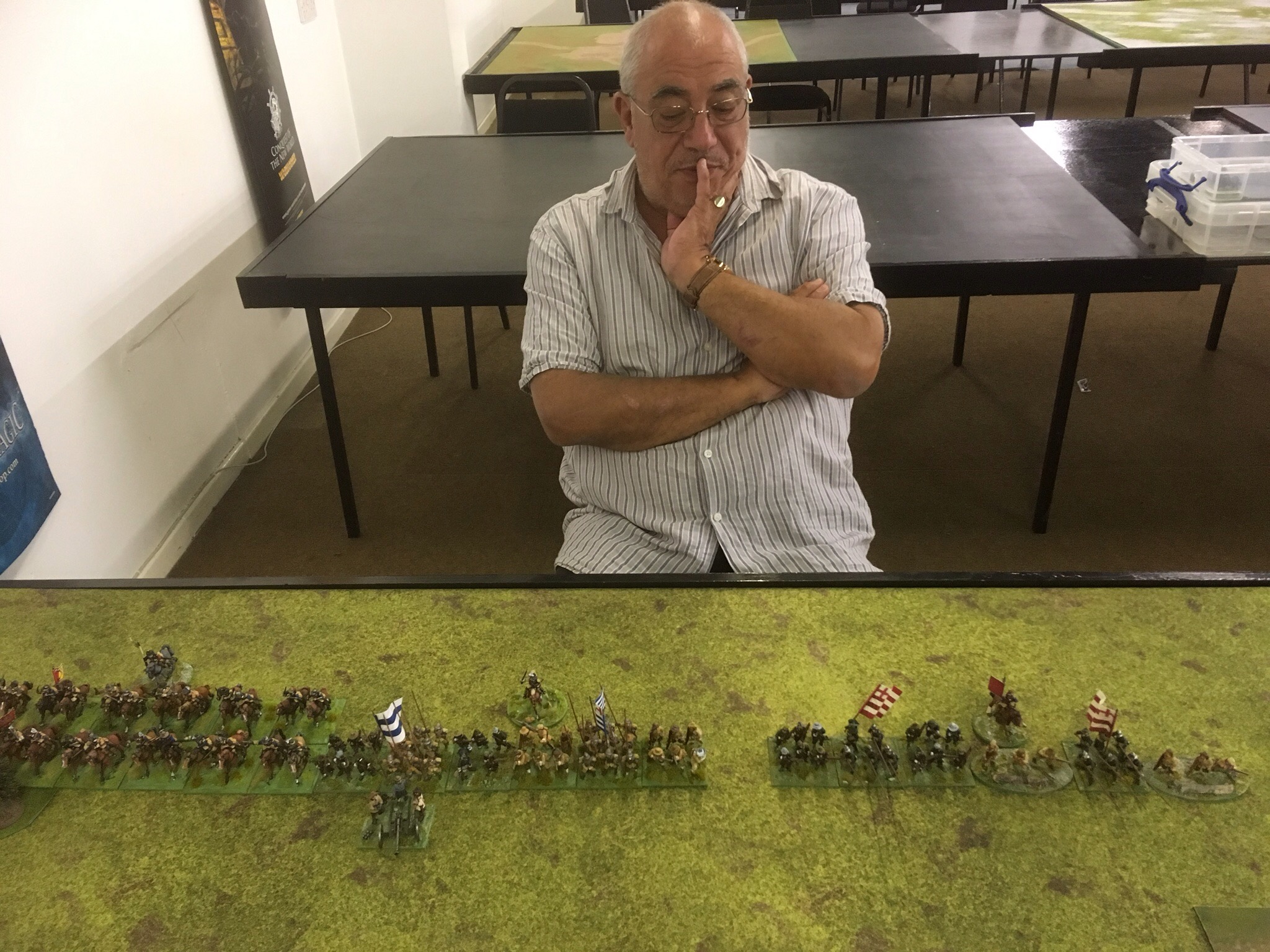
The musketeers and artillery units can shot in both turns so casualties usually accrue quite quickly. At Martins suggestion we experimented with downgrading mounted carbine fire to minus one. Chris’ Poles were already advancing across the whole length of the plain.
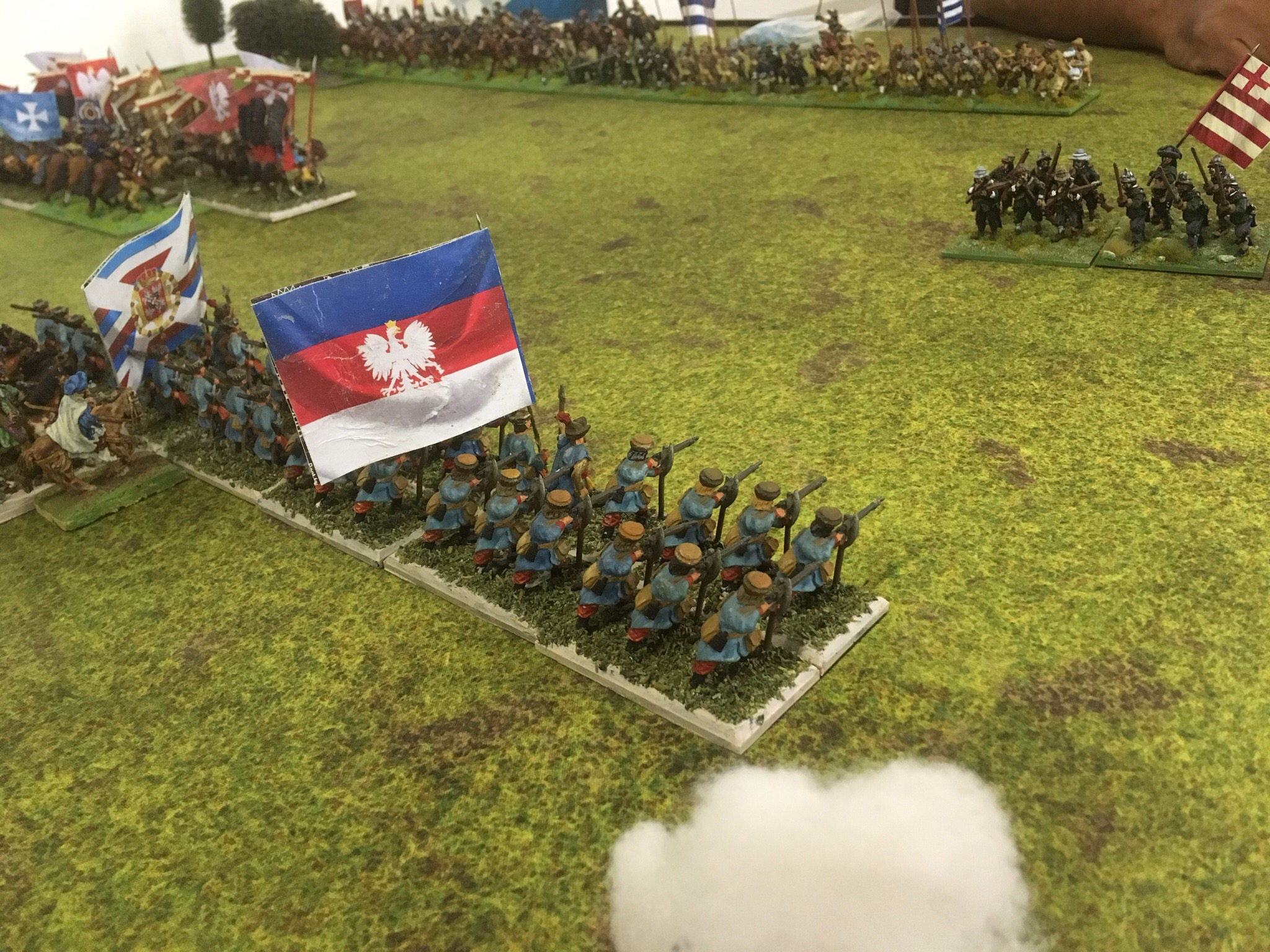


Martin had to wheel one of his German foot regiments to face the encircling Cossacks. Having supporting lay downgraded his fire, Martin also suggested that his deep formation Pistols should not get rear support. The mounted carbine fire did score a number of telling hits on the Hussars.
 In the following combat, more Hussars were lost but their victories benefitted from “ferocious charge” and tore gaps in the Imperialist horse. Martin’s rear ranks could not move due to poor manouvre rolls. Chris brought up his second line of Armoured horse and the line held.

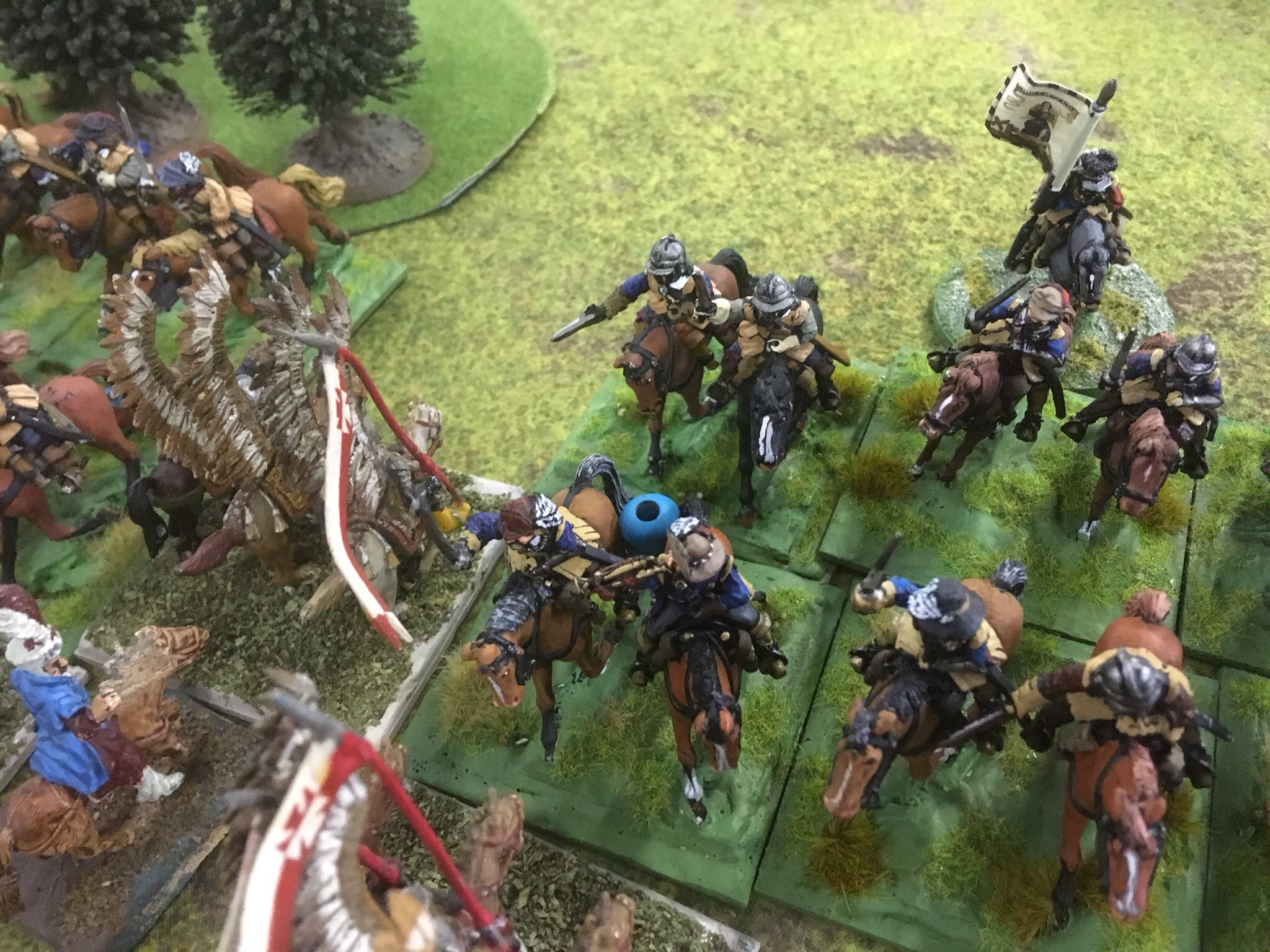
The Livonian Curassiers carved into the Imperialist infantry regiment to the side of the cavalry melee. But, it was in the centre that the German foot was outclassed by the fearsome Haiduks. We classed the Haiduks as “shock” infantry so a winning score added to their opponents disorder. The more conventionally armed Germans could not hold. On the other side of the field, the Cossacks were running rings around their foes.

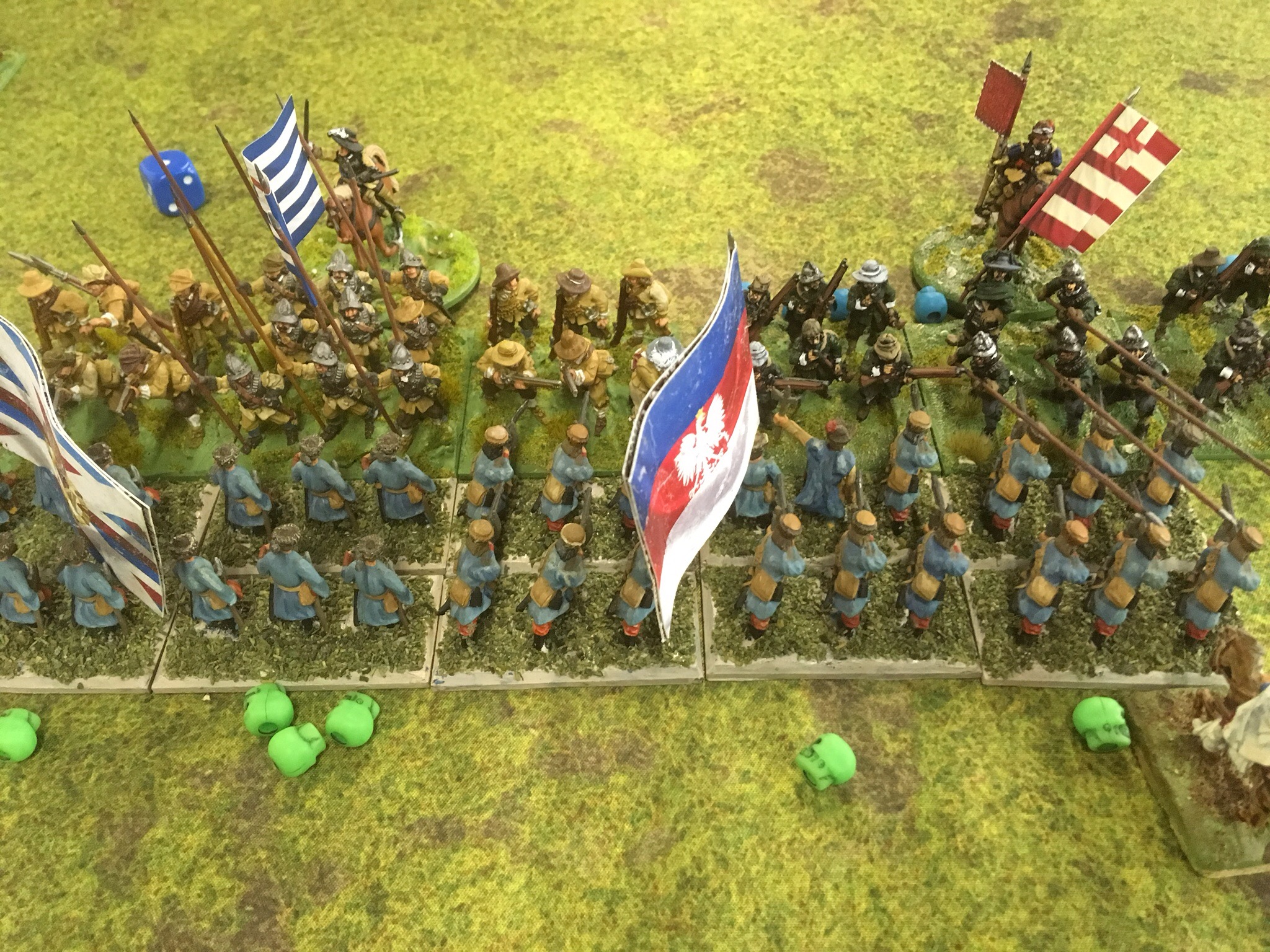
The imperialists conceded defeat as their cannons were taken by the Cossack raiders. It had been a close game and we need to consider the following additions to the rules;
1. Do the units of pike and shot need to stay close together. My inclination is not as the Polish foot are not so constrained. Plus, our definition of a unit is one that is capable of independent action.
2. Pistols should be two UD range. Carbines are minus one for shooting.
3. Pistols should indeed gain a support from a rear unit!
4.Furious charge works for horse and foot, Hussars and Haiduks.
5. We need to work on point costs
As always, thoughts and ideas are most welcome. Thanks for reading!


 Despertaferres
Leave a reply to Jurjen Cancel reply