The following post came up on Facebook last night from Berni of Baueda miniatures. I thought I’d post here as I felt it raised a number of important questions which I thought may raise some debate. Perhaps we could get the opinion of lead supplier to the Terci, Damion Ramasangha for his thoughts…….
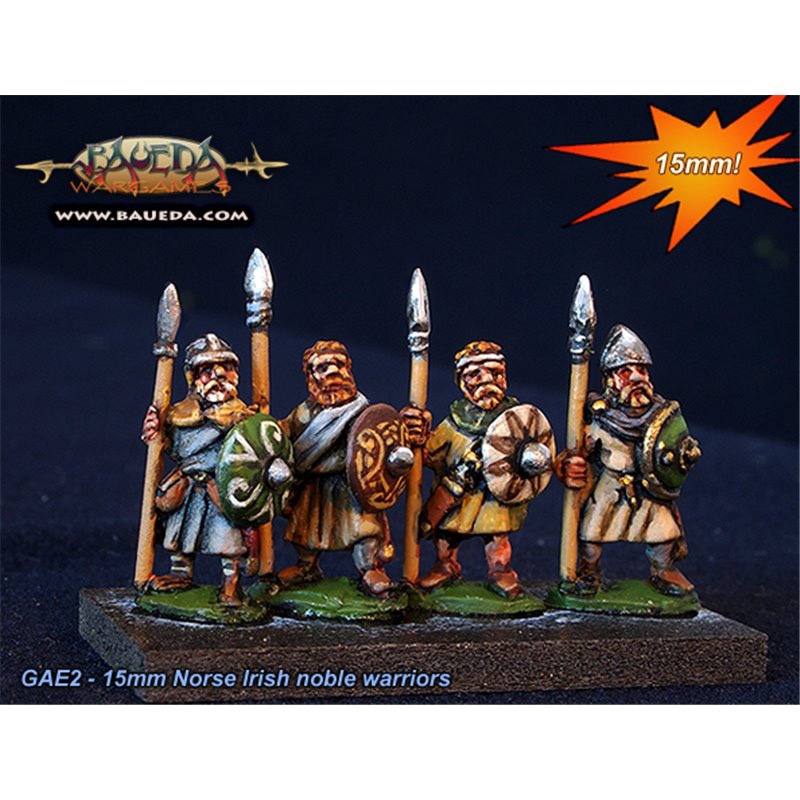
A few people lately asked what happened with the planned 15mm ranges.

Unfortunately we had to freeze all development on new 15mm products. Not a choice I’m afraid, market has just shrank to the point that an investment in 15mm historical products for us has no chance to ever break even, let alone return a profit at some point.
Regrettably we do not have a capital that can allow us the luxury to work for free, we have very limited resources and we need to get all the money we invest into a new project to get back if we want to avoid getting broke and stop working altogether…

I love 15mm ancients and I have chosen to do that as the very first products we ever did as a company, but we simply can not afford to do it any more. Most of the market has now moved to 28mm and on top of that there is the price of tin that keeps rising, plus a ton of others issues that weight against it… it is entirely possible that at some point the market will swing back the other way, I saw it happen once already, it may happen again… but the major force pushing for 15mm was the competition scene, and that was fueled by having basically a single rule system being taken as a standard worldwide for ancients.
The appeal of playing at a larger strategic level than skirmish + 15mm being much more convenient to carry around is what pushed the 15mm in the 90s, up until that moment everyone was playing 25mm (the scale had not yet become “28”) and a couple years later they were all but disappeared, I remember people who owned lots of 25mm complaining they were now mostly relegated to a once a year demo game at some show…
Then two major things happened in the early 2000: the common standard rule set basically killed itself for no apparent reason and got replaced by a multitude of competing rules. Not making a judgement on the merit of any of these, but that alone meant that organized competitions which used to have 40-60 people playing turned overnight into 5-8 tables events. That in turn meant organizers could not afford to rent good places anymore and player were much less keen to travel for something that looked a lot more like their own club meetings than a major national or international event.

The second blow came from technology, as plastic extrusion systems became cheaper new company sprung up, mostly from ex-GW people who wished to bring the quality they were used to in the GW world to the historical scene. That took almost everyone from the the new generations of players away from the 15mm scene and into the scale they were already used to: 28mm. Plastic 28mm are not only of pretty high quality, they are extremely cheap and light, which used to be regarded as the two main advantages small scales had over larger ones. People no longer need to pay a fortune for metal figures and could easily carry around big armies that unlike what happened with lead figures did not weight a ton… OTOH, we now pay in raw tin more to cast a 15mm figure than what most 28mm plastic figures are sold to the customer for.
The last nail in the coffin came as Battlefront managed to recreate a successful tournament scene, that did not existed any longer for ancients, for Flames of War. A large proportion of the competitive players that until then had kept alive what was left of the 15mm ancients market dumped their armies and bought a 15mm WW2 one instead.
Aside of the shrinking pool of players this flooded the market with lots of ready to play armies, so that those few who continued to play in 15mm now had pretty much everything already, and hardly bought any new figures at all. As a direct consequence of this the vast majority of 15mm manufacturers since then either closed down or sold out. Only a few of the major ones remains today, and a couple of tiny ones like us, which are fish so small that could continue to swim in a pool even after the sea had dried up… one notable exception has been Khurasan miniatures which managed to thrive mostly taking over the US market (which used to buy almost everything from the UK) and by offering lots of different things that until then were not available in 15mm like SF, high quality fantasy etc. I think they too have stopped doing new ancients now however… another notable exception is Forged n Battle from West Wind Productions, which stands out because most of the people who bought into it do not came from the old 15mm ancient market. I remember reading the comments when they did the first kickstarter and it was a chorus of people saying what a wonderful fresh and novel idea was to make ancients in 15mm and wondering why nobody thought of it before… why indeed.
But in the words of Andy Cooper himself: “War & Empire is my pet project. I have always loved Ancient History, the battles of Carthage and Rome, the conquests of Alexander the Great. Over the last couple of years I have been slowly sculpting this Ancients Range of Miniatures and now Kickstarter has given me the opportunity to make it a reality.” Once the campaign was over Andy managed to do a couple of other smaller ones, but then it ended there. He did it because he loved it and could afford to, not because it was a sound market idea, and in the long term it obviously did not bring in enough to make it worth to continue to grow…
Last but not least, we have now entered the age of 3D printing, and that alone I think is going to put the definitive gravestone on all the historical market, not only ancients. There are a lot of passionate people who are actively making available models to print at home for pretty much everything, free or almost. In larger scales, the quality and originality of a model may continue to have a value for longer, but in a scale as small as 15mm, it will become ever harder to even tell the difference between a professional sculpt and an amateurish job. As there is no copyright to protect historical models by definition, recovering any investment in it, which is pretty much already impossible now, will become ever more difficult in the coming years… so for the time being, R.I.P. 15mm ancients.
so what you think? Do you disagree with this analysis? Do you see any different future for 15mm ancients and historical in general?
Maybe one day…?
Let us know in the comments!
Cheers,
Claudio
As I said in the introduction, many interesting if not downright worrying trends. Berni has posted widely on Facebook but you are most welcome to post here too!
Mike


 Despertaferres
Leave a reply to Pete S/ SP Cancel reply