
Cavaliers: Origin of the Term:The word “cavalier” is an anglicized version of the Spanish “caballero,” which means “gentleman” or “horseman”.
- Parliamentarian Perspective:Parliamentarians used the term “Cavalier” to describe Royalists, implying they were associated with foreignness, violence, and the idea of gentlemen on horseback riding over ordinary people.
- Royalist Perspective:Initially, the term was used as a term of abuse, but Royalists later adopted it, using it to convey bravery, chivalry, and loyalty.
- Contrasting Nicknames:The Parliamentarians were nicknamed “Roundheads” by Royalists, a reference to the short hair of some London apprentices who supported Parliament, while the Royalists were called “Cavaliers”.
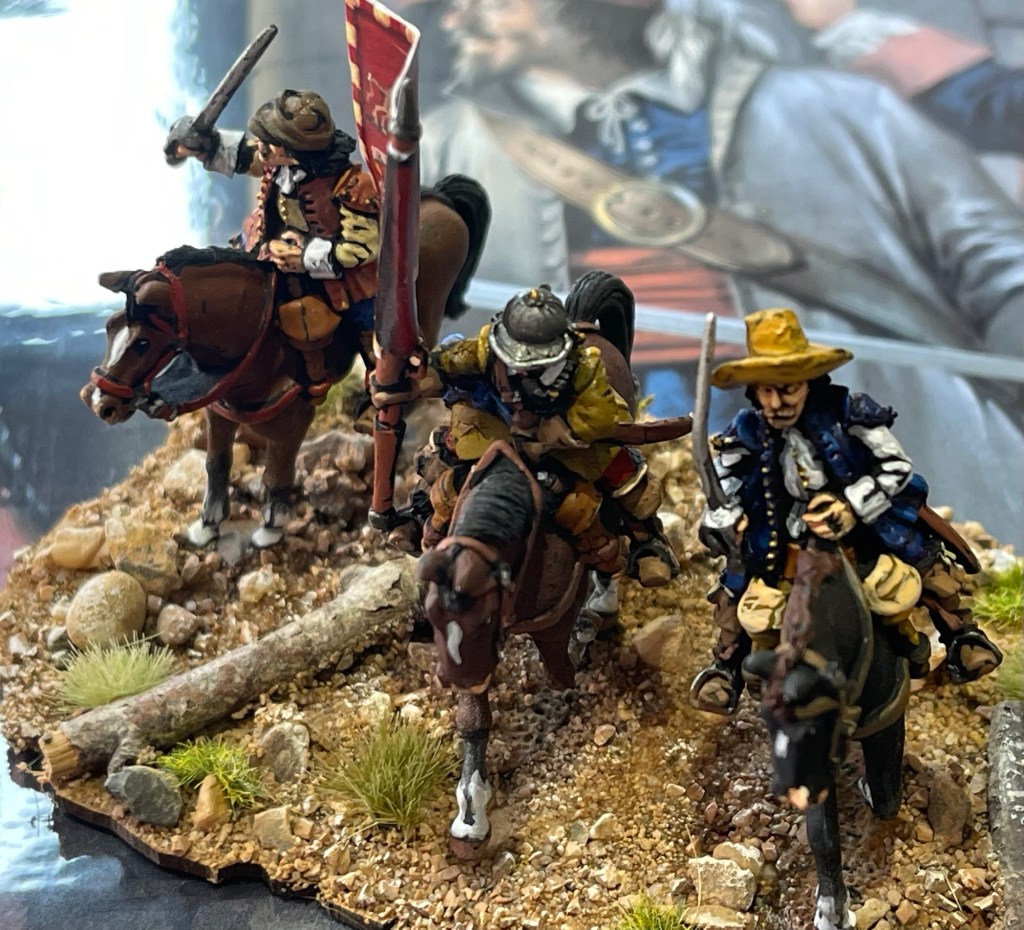
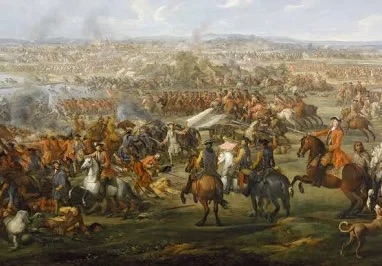
During the English Civil War (1642-1651), the royalist cavalry played a significant role in the conflict between the Royalists, who supported King Charles I, and the Parliamentarians, who sought to limit the power of the monarchy.
As my own politics decry any political movement since the French Revolution, what could be finer that a multitude of the righteous!
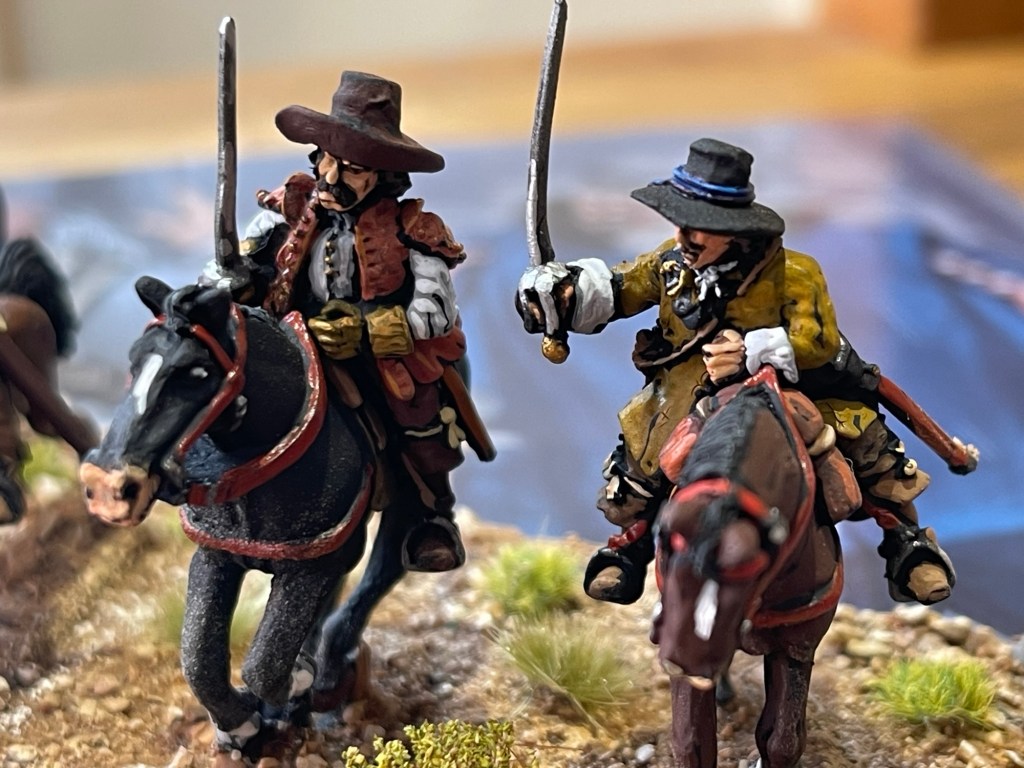
Here are some key points about royalist cavalry during this period:
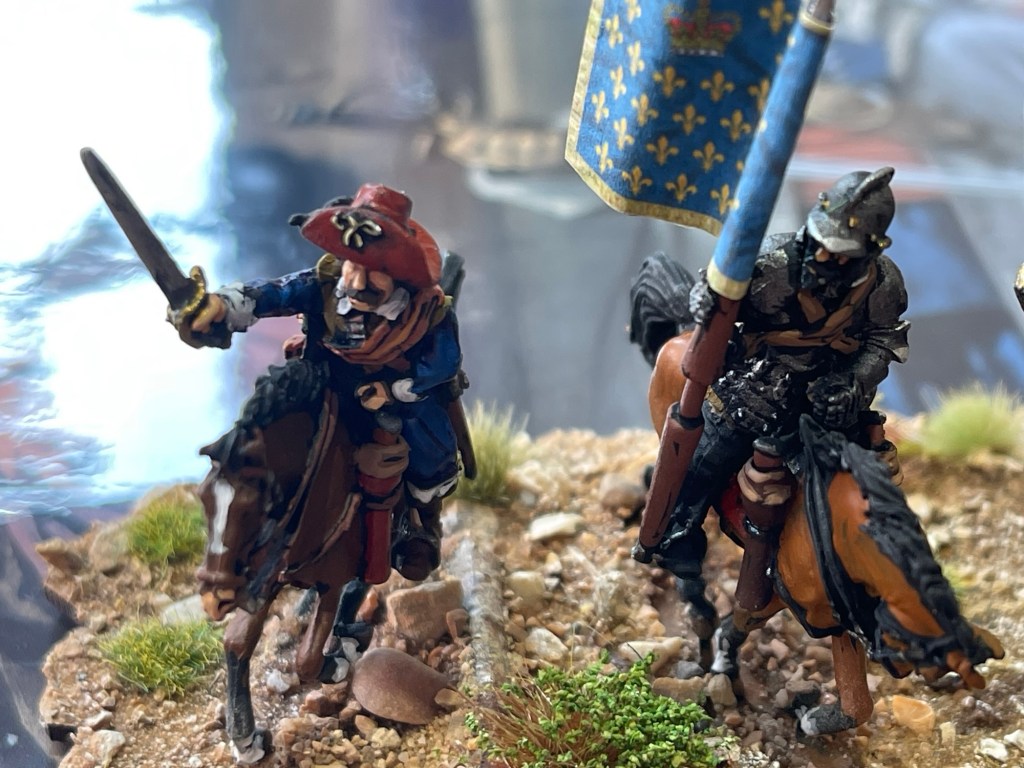
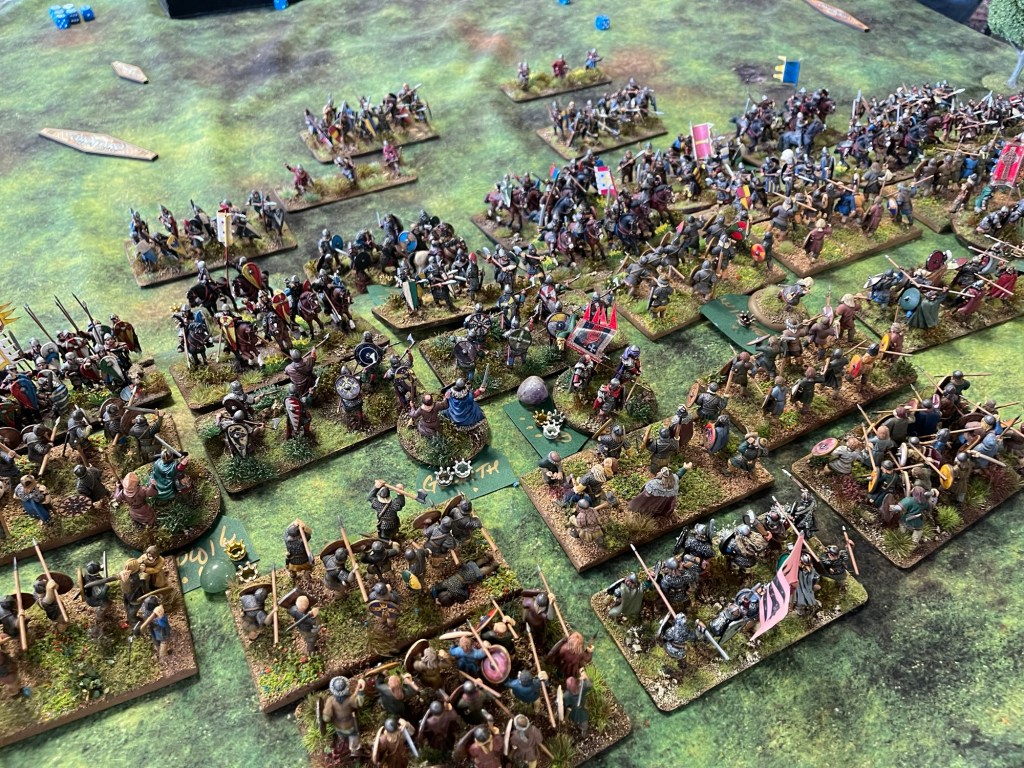
- Composition: The royalist cavalry was primarily composed of gentlemen and wealthy landowners who could afford to maintain a horse and equipment. They were often regarded as the elite of the army, characterized by their better training, better horses, and higher morale compared to some of their Parliamentary counterparts. I have painted two units as a General’s bodyguard of the admittedly rare cuirassiers.
- Leadership: Prominent commanders such as Prince Rupert of the Rhine, who was a nephew of King Charles I, led royalist cavalry forces. Rupert was known for his aggressive tactics and daring cavalry charges, earning a reputation as a skilled cavalry officer.
- Tactics: Royalist cavalry typically employed tactics that emphasized mobility and shock action. They often executed flanking maneuvers and charges to disrupt enemy formations and exploit vulnerabilities. The royalist cavalry was skilled at performing hit-and-run tactics and would often engage in light skirmishes rather than head-on confrontations.
- Difficulties: Despite their strengths, the royalist cavalry faced several challenges during the war. The Parliamentarian forces gradually adapted their tactics and improved their own cavalry units. Additionally, royalist cavalry suffered from supply issues, particularly in terms of food and horses, which impacted their effectiveness in prolonged campaigns.
- Role in Battles: The royalist cavalry played crucial roles in many battles, such as the First Battle of Newbury (1643), the Battle of Marston Moor (1644), and the Battle of Naseby (1645). While they achieved some early successes, the general decline in royalist fortunes toward the later stages of the conflict was exacerbated by defeats and loss of key strongholds.
- Cultural Legacy: The image of the royalist cavalry has found its way into popular culture and historical narratives. Their flamboyant uniforms, swift maneuvers, and the romantic notion of chivalry have contributed to a lasting legacy that evokes the conflicts of the era.
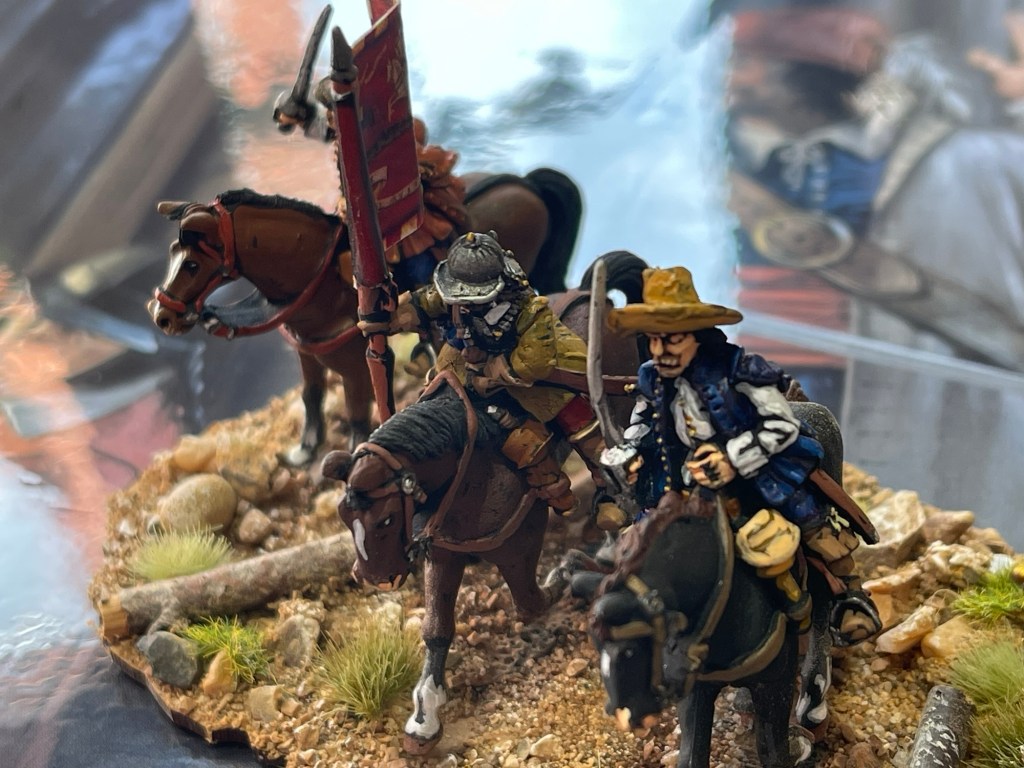
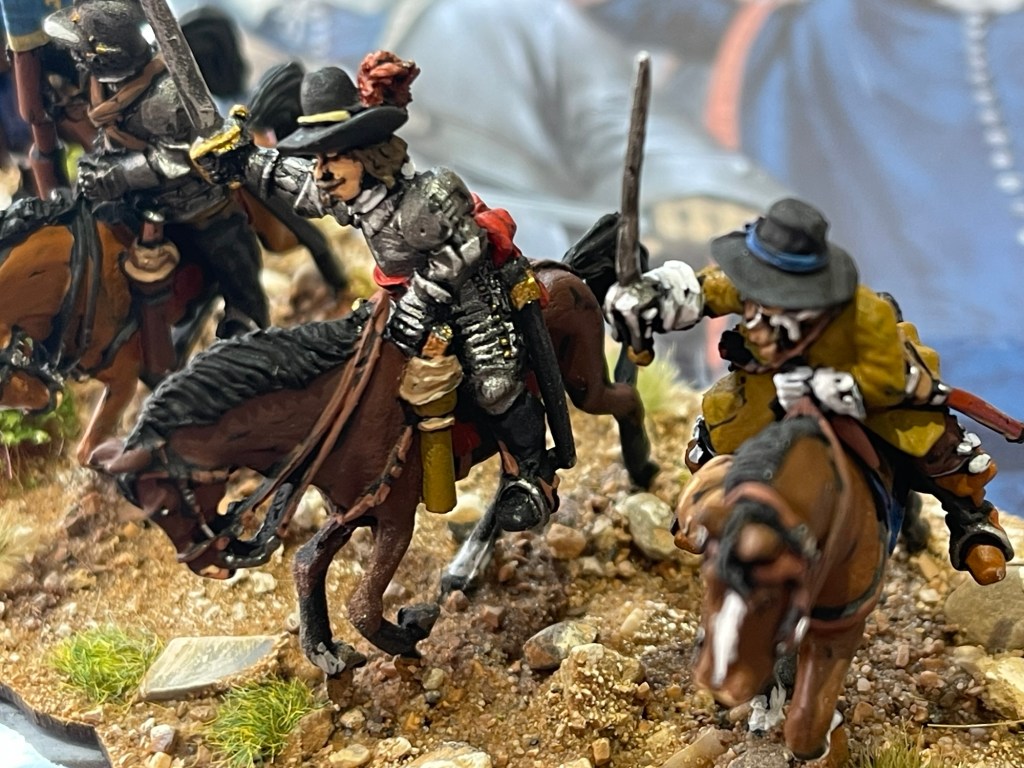
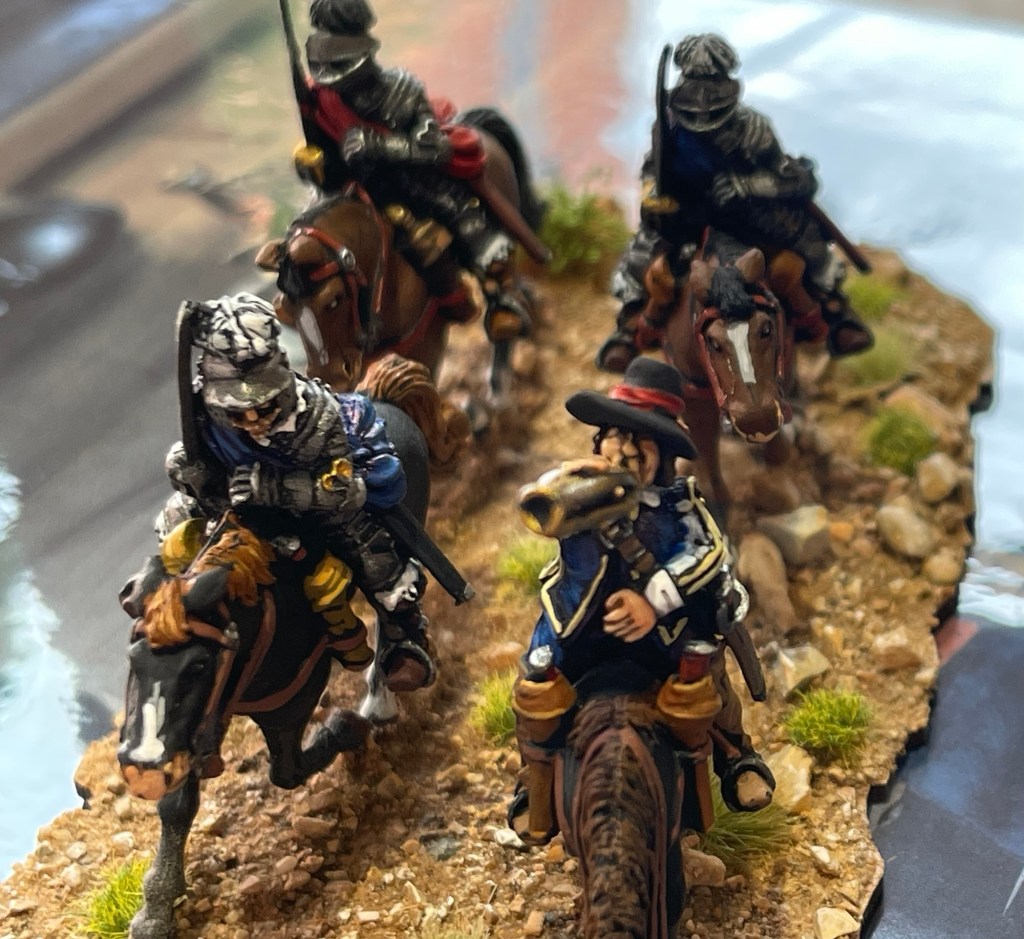
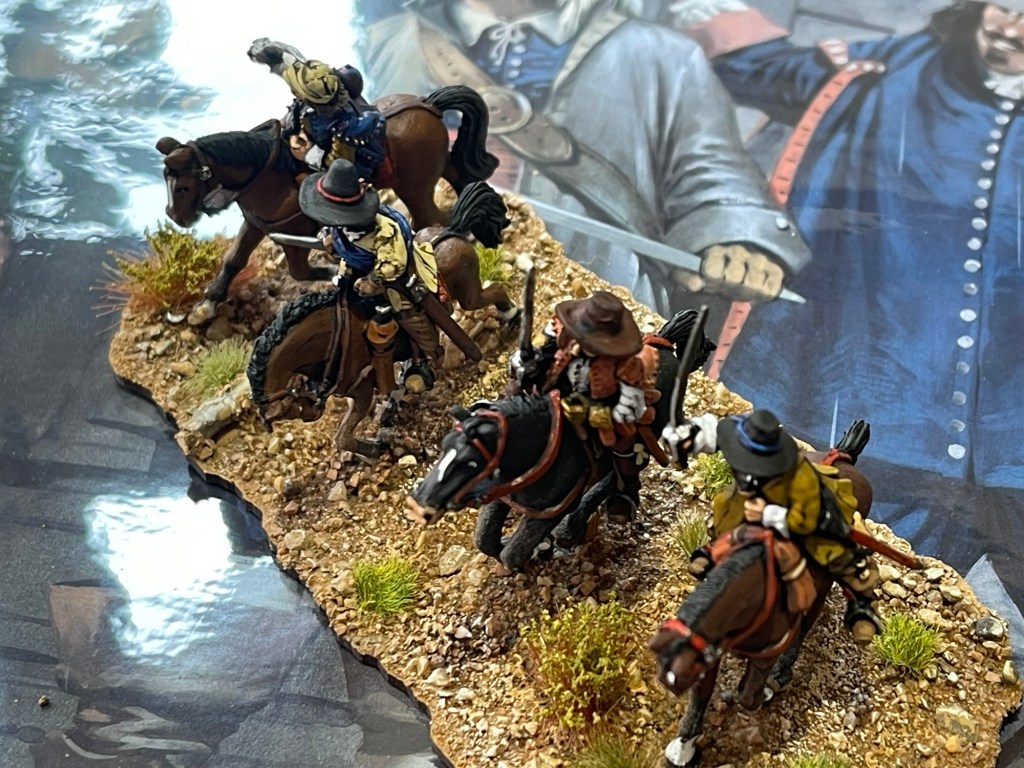
Most of the miniatures are my favourite Bicorne miniatures and I will definately be buying more of these excellent minis. Amongst the Bicorne troopers are Renegade cuirassiers and some Bloody Miniatures royalist horse. The Bloody miniatures minis are a tad smaller and finer than the other two: noticeable if put side to side if not on the tabletop.
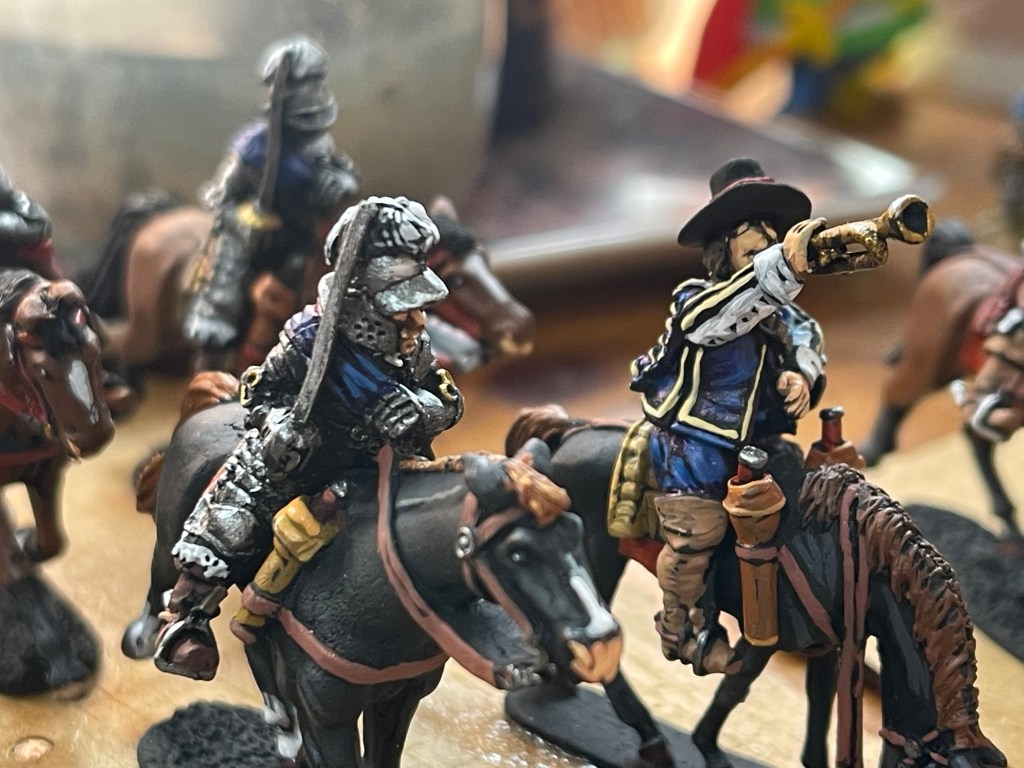
This was my first attempt at speeding up painting- I’ve gone back to black undercoating for these but more of this in a later post. Suffice to say, I ve painted twenty mounted minis in five weeks so I am content!


 Despertaferres
Leave a reply to redcaer1690 Cancel reply